
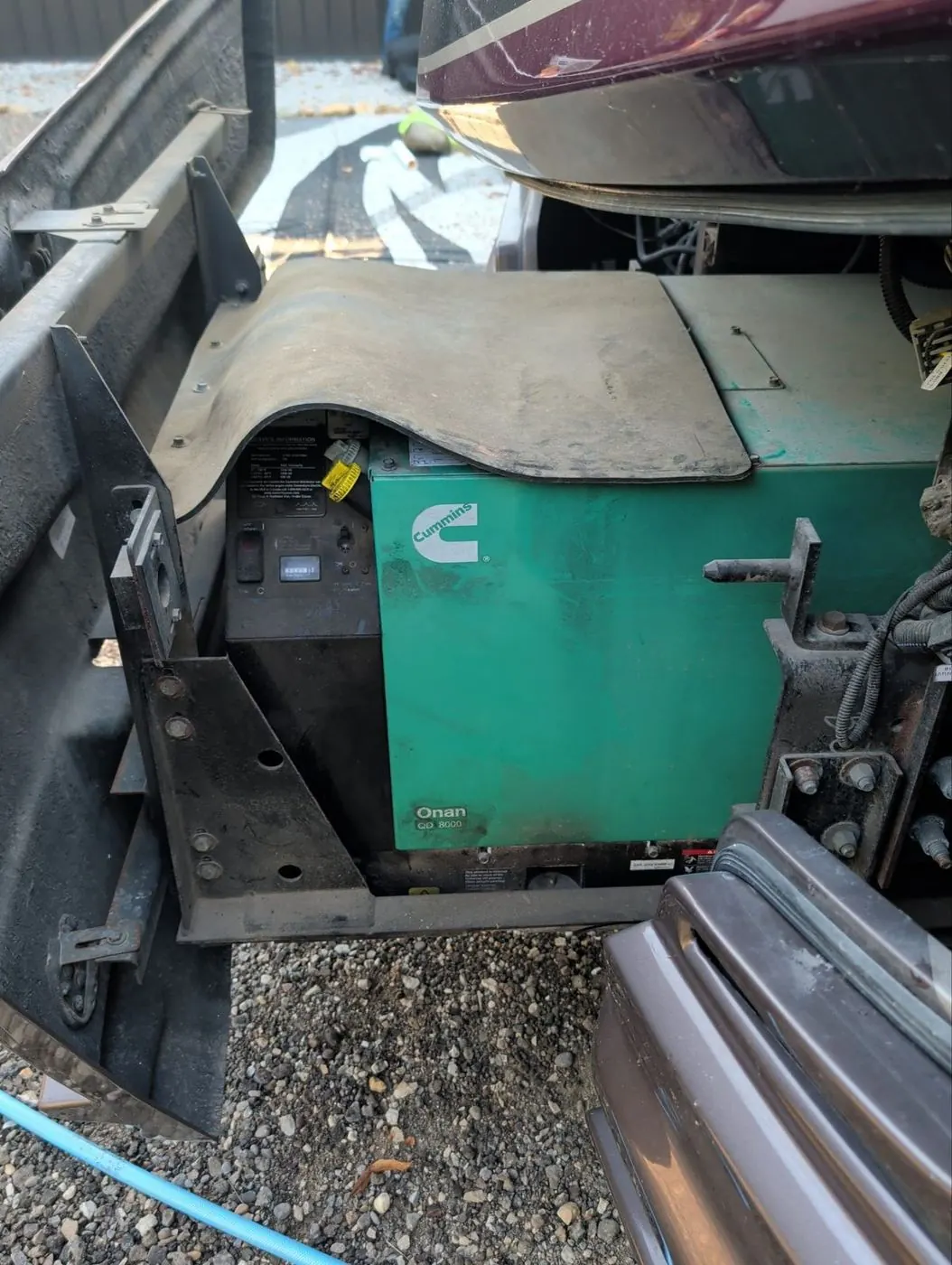
Almost every dead RV generator we get called out for died the same way. Not from hard use. From sitting.
A generator is an engine. It has oil that breaks down, fuel that goes stale, filters that load up, and seals that dry out when nothing moves. The difference between a generator that fires the first time and one that leaves you without air conditioning in July usually comes down to five habits, and none of them are hard.
1. Run it under load, every month
This is the one people skip, and it is the one that matters most.
Starting the generator and letting it idle for five minutes does almost nothing. Under load means actually making it work: turn on the air conditioners, run the microwave, put a real demand on it for 15 to 30 minutes.
Why it matters depends on what you have. On a gasoline generator, running it pulls fresh fuel through the carburetor and keeps the jets from varnishing shut, which is the single most common reason a generator will not start in the spring. On a diesel generator, running under light load or no load causes unburned fuel to accumulate in the exhaust, a condition called wet stacking. Heat and load are what clear it.
Once a month, on a calendar reminder. It costs you half an hour and a little fuel. It is also on our seasonal maintenance calendar, along with everything else that runs on a clock.
2. Change the oil once a year
Manufacturers generally call for service every 150 hours or annually, whichever comes first, and that annual part is not filler. Oil degrades on a timeline whether the engine runs or not. It absorbs moisture, it picks up combustion byproducts, and the additive package that protects the bearings depletes.
A generator that only sees 40 hours a season still needs its oil changed every season. Hours are not the only clock.
Change the oil filter with it. There is no version of this job where reusing the filter makes sense.
3. Stabilize the fuel before it sits
Gasoline starts degrading in about a month. Ethanol blends make it worse, because ethanol attracts water and can separate out in the tank, leaving you with a layer that will not burn and will corrode what it touches.
A stabilizer like Sta-Bil, added before the fuel sits, keeps it usable through a storage season. Add it, then run the generator long enough to pull treated fuel all the way through the lines and the carburetor. Stabilizer sitting in the tank does nothing for the fuel already downstream of it.
If your generator draws from your motorhome’s main tank, treat that tank.
4. Keep the filters current
Air filter
A restricted air filter makes the engine run rich. You will see it as black exhaust, rough running, and fuel economy that got worse for no apparent reason. It is a cheap part and an easy check. Look at it every season and replace it when it is dirty rather than on a schedule.
Fuel filter
Debris and water collect in a tank that sits, and the fuel filter is what stands between that and your carburetor or injectors. Replace it as needed, and more often if your generator has ever been run down toward empty, which is when tanks give up their sediment.
5. Check the things nobody checks
Two items take five minutes and prevent service calls:
Battery connections
Generators crank off a battery, and corroded or loose terminals produce exactly the symptom people mistake for a dead generator: it clicks, or it cranks slowly and will not catch. Clean connections are free.
Exhaust condition
Look at the exhaust for rust, holes, and anything that has come loose. This is not a performance item, it is a carbon monoxide item, and it is worth thirty seconds of your attention every time you are in the bay.
When to bring someone in
The habits above are owner-level. A few things are not:
- Load testing and checking output voltage
- Transfer switch operation
- A generator that starts and then shuts down under load We service RV generators throughout Southeast Michigan, in your driveway, at your campground, or at your storage lot. The generator stays in the bay for most of this work, which means your rig does not have to go anywhere.
Call 248-517-5165 to schedule generator service, or check whether your address is in our service area.