
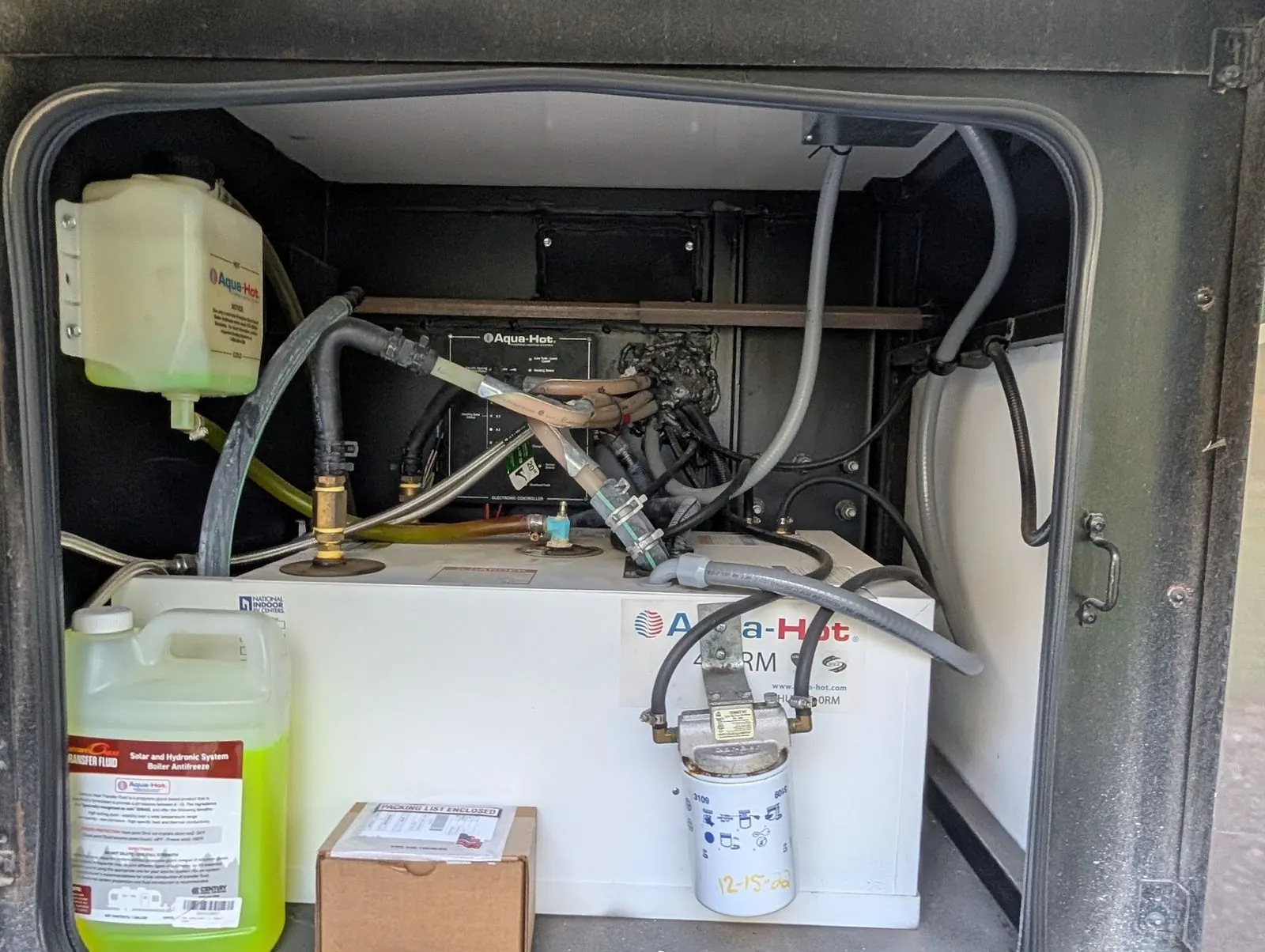
Your Aqua-Hot is doing more work than almost anything else in your coach. It heats the cabin, it makes your hot water, and on a diesel model it runs a burner to do it. It is a boiler, a fuel system, and a heat exchanger network all in one box in a bay, and it is the reason you can pull into a campsite in November and be warm in twenty minutes.
It’s also the system most owners think about exactly once: that cold winter night it stops working.
We are a factory authorized Aqua-Hot service center, and the annual service is the single best thing you can do to keep your coach warm and cozy.
What the system is actually doing
An Aqua-Hot does not blow hot air the way a furnace does. It heats a boiler tank of propylene glycol antifreeze, then circulates that hot fluid through heat exchangers: one for your hot water, and others tied into radiator fan units around the coach for cabin heat.
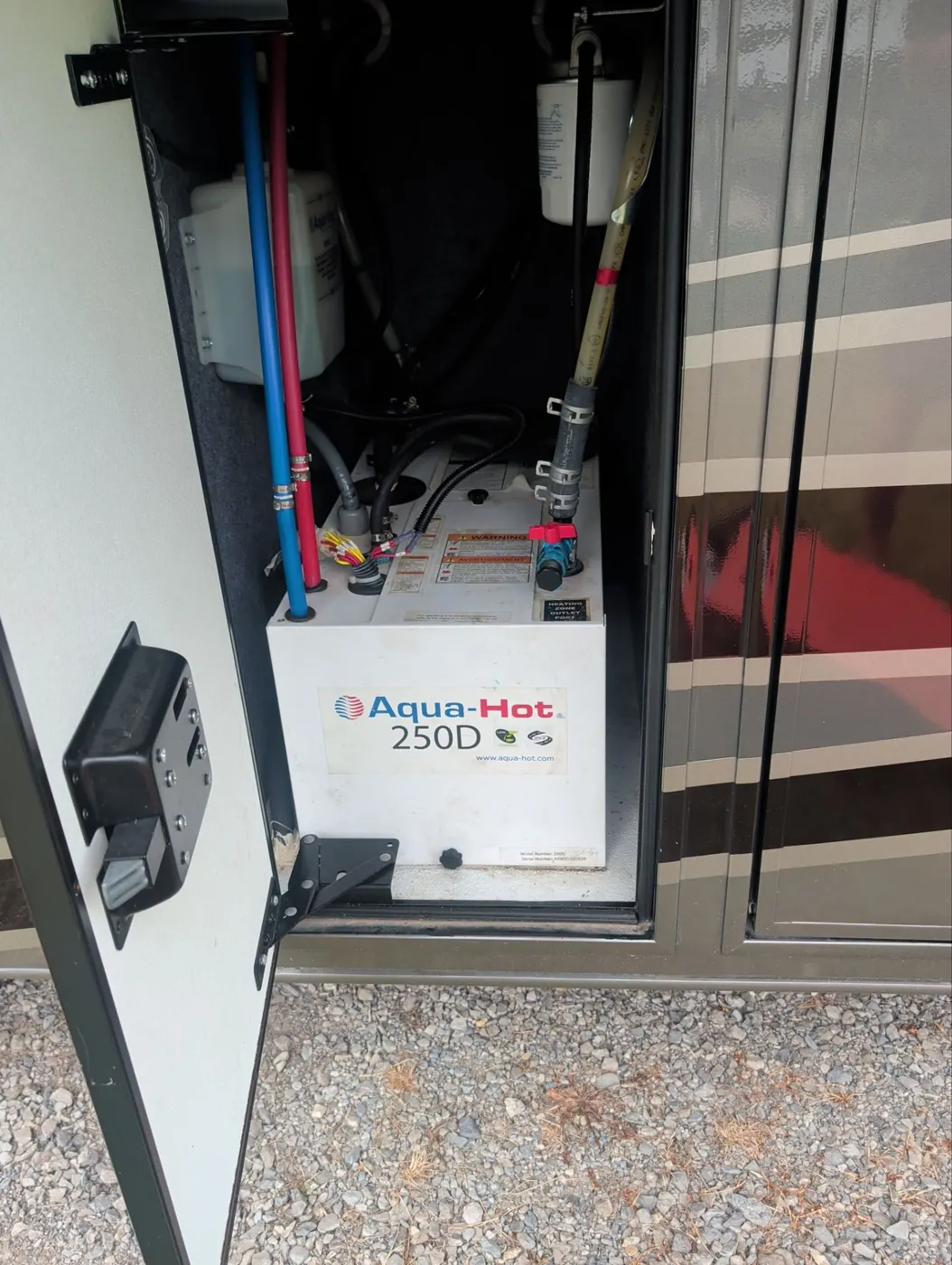
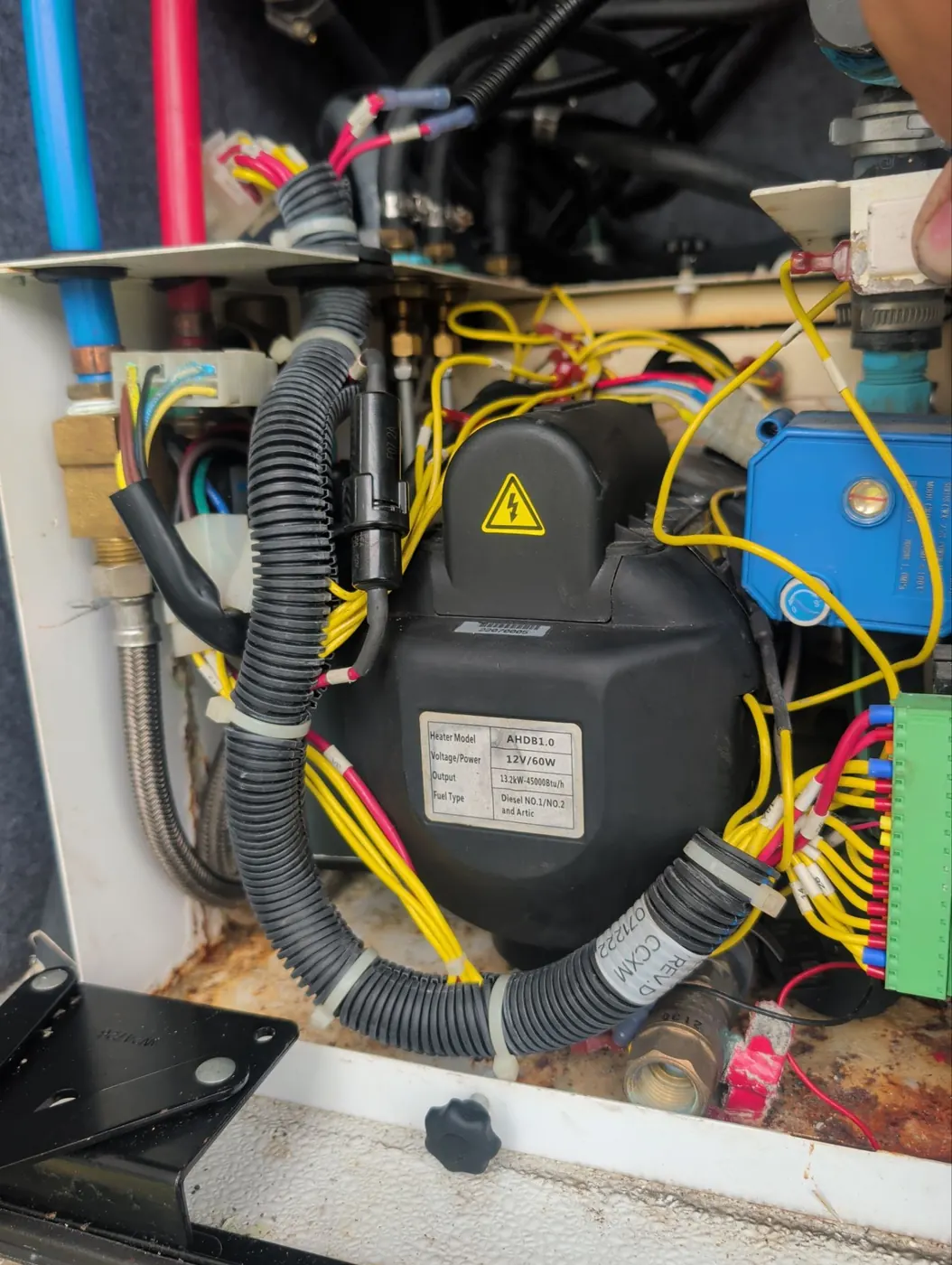
Two things heat that fluid. On shore power or generator, an electric element does most of the work. Off shore power, or when demand is high, like taking a hot shower, the diesel burner fires. That burner is where the wear happens, and it is where nearly every service item lives.
The best thing you can do for your burner is use it
This is the single most useful habit an Aqua-Hot owner can build, and almost nobody does it.
Diesel left sitting at the nozzle breaks down. The fuel that is parked in the line and at the tip when you shut the system off does not stay fuel. It oxidizes, it leaves deposits behind, and those deposits are what clog a nozzle and wreck the spray pattern. A burner that fires regularly keeps pulling fresh fuel through and flushing that away. A burner that sits for eight months does not.
So use it. If you are plugged in and the electric element could carry the load, let the burner run anyway sometimes. Take a long shower on burner heat. Run it in the shoulder season instead of reaching for a space heater.
Fire it monthly, even in storage
Even when the coach is parked for the winter, start the Aqua-Hot and bring it up to temperature at least once a month. Not a thirty second run. Let it reach operating temperature so fuel actually moves through the system and the boiler fluid circulates.
Half an hour, once a month, is the cheapest insurance on this system.
Other habits worth building
Keep fuel in the tank
On a diesel coach the Aqua-Hot burner draws from your main fuel tank. Running the tank low means the burner is pulling from the part of the tank where water and sediment collect, and eventually it means no burner heat at all.
Remember that it needs 12 volts
The burner is only half the system. The circulation pumps and the interior fan units run off your house batteries. A weak or disconnected battery bank produces a symptom that looks exactly like a dead Aqua-Hot: the system seems to run but no heat reaches the coach. Before you assume the worst, check your 12 volt side.
Watch the boiler fluid level, and use the right antifreeze
Check the level at the expansion tank now and then. If it needs topping off, use only the propylene glycol boiler antifreeze specified for the system. Automotive coolant is not the same thing and does not belong in a hydronic loop.
Keep the bay and the fan units clear
The system needs combustion air, and the fan units around the coach need to move air across their coils. Storage bins stacked against a fan unit, or gear packed around the intake in the bay, will cost you heat and can cause a combustion problem.
Winterizing is not automatic
The boiler side is already protected. It is full of antifreeze. The domestic hot water side is not, because that is your fresh water running through a heat exchanger, and it will freeze like any other water line. When you winterize the coach, the Aqua-Hot’s domestic side has to be part of that job.
What the annual service covers
This is the manufacturer-recommended service, and it is what our maintenance service performs:
- Replace the burner nozzle
- Replace the fuel filter
- Test the aquastat and control board
- Inspect boiler fluid, top off or flush as needed
- Check the hydronic loop for leaks
- Inspect the exhaust and combustion air intake
- Test ignition and safety shutoff Every item on that list is either a wear part or a safety check.
What goes wrong when it gets skipped
The nozzle builds up deposits
The burner nozzle atomizes fuel into a fine, even spray. As it accumulates debris, that spray pattern distorts. You get harder starts, rougher running, and incomplete combustion, which means soot building up inside a system that is supposed to stay clean. The nozzle is a small inexpensive part. Fixing the damage a bad one causes is not.
The fuel filter clogs
Diesel picks up water and debris sitting in a tank between trips. A restricted filter starves the burner, and the first symptom most people notice is the system failing to fire on the coldest night of the year.
The boiler fluid deteriorates
This is the one that costs real money. The antifreeze in the boiler carries corrosion inhibitors, and those deplete over time. Once they are gone, the fluid stops protecting the tank and the loop and starts working against them. Corrosion inside a hydronic system is not something you fix with a part swap. It is a full system replacement.
The exhaust or intake gets blocked
Nests, debris, and corrosion all end up in the same places. Restricted airflow means poor combustion at best, and a combustion problem in a fuel-burning appliance is a safety issue, not just a performance one.
When to schedule it
Spring, not fall.
This surprises people, because it is a heating system and the instinct is to service it before winter. But think about where the wear actually comes from. If your coach sat through the winter, the diesel in that system has been sitting too. It has had months to break down, drop out water, and leave deposits at the nozzle. Replacing the nozzle and the fuel filter in the spring means you start the season with a clean fuel path instead of carrying last year’s degraded fuel forward.
It also means you are not trying to book heating work in January, when you actually need heat and every shop in the state is backed up.
If you run the coach year round, schedule around your usage instead. Hours on the burner matter more than months on the wall.
Why the authorized part matters
Aqua-Hot systems are not a place to guess. The diagnostic path on a no-heat call runs through the control board, the aquastat, the burner, the fuel side, and the fluid, and knowing which of those to rule out first is most of the job. Being factory authorized means we work to the manufacturer’s procedures and specifications rather than working it out as we go.
It also means we are not going to sell you a component swap when the fix is a nozzle and a filter.
We come to your coach
Your Aqua-Hot lives in a bay, and everything on the annual service list is reachable there. That means no shop appointment, no hauling a forty foot coach across town, and no leaving it somewhere for a week.
We service Aqua-Hot and Hydro-Hot systems throughout Southeast Michigan, covering Oakland County and reaching into Macomb, Genesee, Livingston, Wayne, and Lapeer. We come to your driveway, your campground, or your storage lot.
Call 248-517-5165 to get on the schedule, or check whether your address is in our service area.